Crypto Scam Red Flags: What We Learned Watching the Playbook Get Written
Most crypto scams run the same playbook. We watched it get written, from BitConnect to today's fake trading groups. These are the red flags, and how to verify anyone before you trust them.

Updated
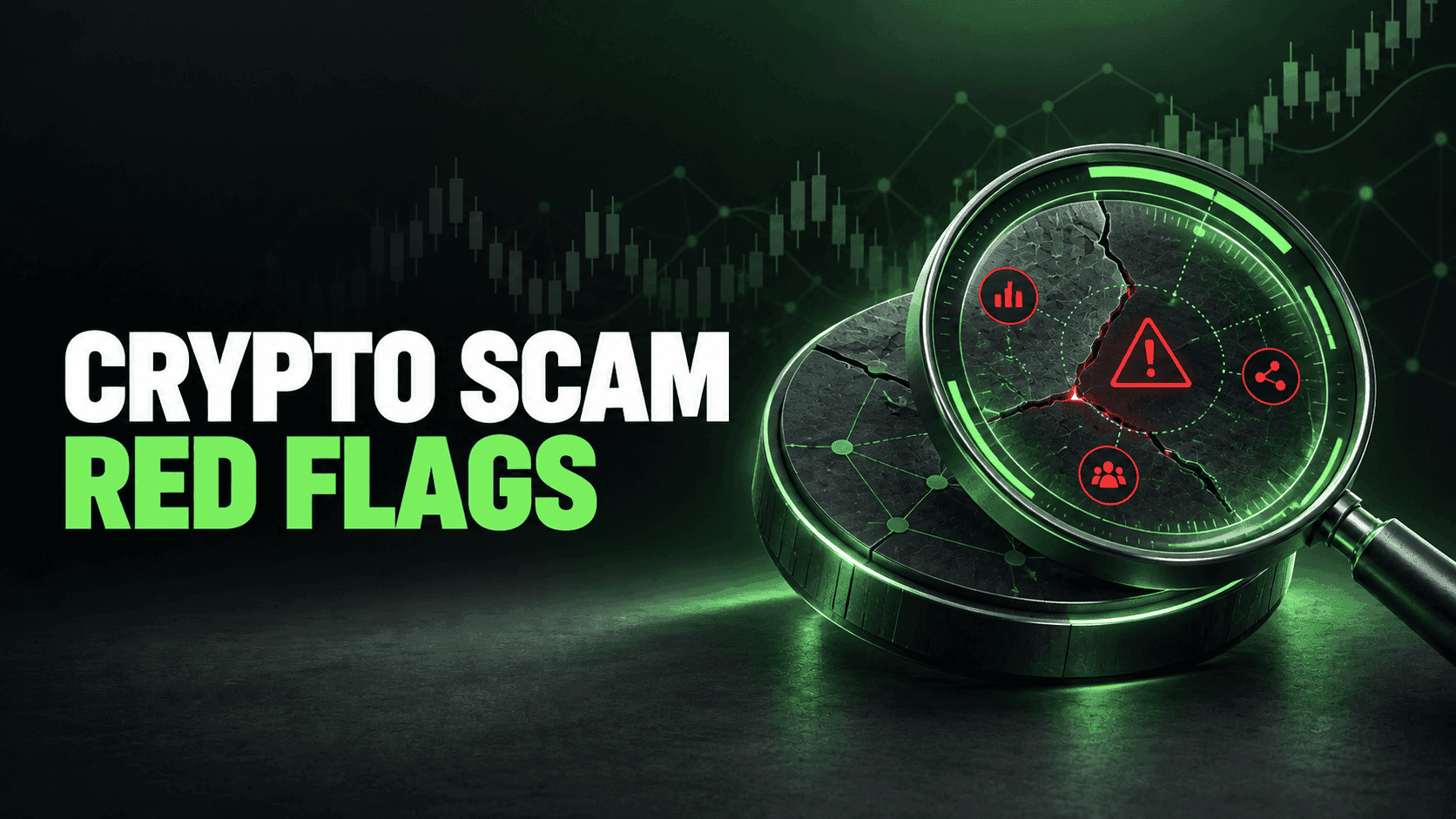
The clearest crypto scam red flags are a promise of guaranteed or fixed returns, unsolicited contact about an investment, pressure to act quickly, and a request to move your money onto a platform someone else chose. Almost every crypto fraud combines several of these. None of them requires you to understand blockchain to spot, only to slow down and verify.
I was in crypto before it was in a single newspaper. That meant I watched the scam market get built from nothing. BitConnect, which the SEC later charged as a $2 billion fraud, and USI-Tech were among the first multibillion-dollar schemes, and the playbook they used is still running today with new names and better websites.
Why do smart people get scammed?
Because scams are designed for smart people. They borrow the language of real investing, show professional-looking dashboards, and target moments of hope or fear. Coverage of modern crypto fraud describes victims as thoughtful, capable adults over and over again.
Getting scammed does not mean you are gullible or bad at this. It means nobody taught you the verification habits that close the gap. And being scammed in a market does not make the market a scam. It makes verification a skill worth learning.
What are the red flags of a crypto scam?
1. "Guaranteed," "fixed" or "consistent" returns
"2% a day." "A 90% win rate." "Guaranteed monthly income." Real crypto markets are volatile. No legitimate person can promise a return, and anyone who does is telling you what you want to hear. This single flag catches more scams than any other.
2. They contacted you first
A wrong-number text that turns friendly. A stranger in a group chat who happens to be making great money. A dating match who wants to show you their trading app. Unsolicited contact about investing is the opening move of the pig butchering scam.
3. They choose the platform
If someone wants you to deposit on an exchange or app they recommend, especially one you had never heard of, stop. Fake platforms show whatever balance the scammer wants you to see.
4. You can deposit easily, but withdrawing needs a fee
"Pay the tax first." "Your account needs a verification deposit." "Upgrade to VIP to withdraw." Any fee to access your own money is a red flag, and paying it almost never releases the funds.
5. Urgency
"This window closes tonight." "Only three spots left." Pressure exists to stop you from checking. A real opportunity survives a day of research.
6. They want your keys or login
No legitimate company, exchange or mentor will ever ask for your seed phrase, private keys, exchange password or two-factor codes. Anyone who asks controls your money the moment you answer.
7. They want to trade for you
"Send it to us and we'll manage it." Handing over custody of your crypto removes the one protection you had. Education, signals or advice never require someone else to hold your funds.
8. Anonymous leaders
"The professor." A cartoon avatar. A first name only. If you cannot find out who is running the operation, you cannot hold anyone accountable when it disappears.
9. Impersonation of real people
Scammers impersonate real brands and real founders, including ours. Several of our members have been contacted by fake "assistants" using Niko's name. A familiar name on a message proves nothing. Check it against the official channels on the real website.
How do you verify a crypto company or mentor?
Run the same checks on anyone asking for your trust or your money:
- Names and faces. Are the founders named, with a history you can look up?
- A real address. Is there a business address you can confirm?
- Independent reviews. Are there reviews on platforms the company does not control, such as Google and Trustpilot, and do they read like real people?
- No promised returns. Does the company avoid income claims and win-rate marketing?
- No custody. Do you keep full control of your own accounts and funds?
- They welcome scrutiny. Do they encourage you to research them first?
One of our members remembered this line from our own onboarding: "You shouldn't just take our word for it. You should research us, Google us, do background checks." That is the standard we hold ourselves to, and it is the standard you should hold anyone to. Our verification page lists our official channels and what we will never do.
What to do if you think you have been scammed
- Stop sending money. Do not pay any fee, tax or deposit to unlock a withdrawal.
- Save everything. Screenshots, wallet addresses, transaction IDs, usernames and messages.
- Report it. In the United States, file a report with the FBI's Internet Crime Complaint Center at ic3.gov. The FTC also publishes guidance on crypto scams.
- Secure your accounts. Change passwords, reset two-factor authentication and move any remaining funds to a wallet only you control.
- Be wary of "recovery" services. Scammers often follow up posing as firms that can get your money back for an upfront fee.
Getting back on course
A wrong turn on the way to the grocery store does not mean you turn around and go home. You let the route recalculate and keep going. Plenty of people who were burned once go on to become careful, disciplined investors, because they learned exactly what to look for.
If you want to rebuild with a process and a community that tells you to verify it first, book a fit call. And if anyone contacts you claiming to be us, check the verify page before you reply.
Frequently asked questions
A promise of guaranteed, fixed or unusually consistent returns. Real crypto markets are volatile, and nobody can promise a return. Scams use the promise because it is exactly what people want to hear.
A long con where the scammer builds trust over weeks, often through a wrong-number text, a dating app or a trading group, then steers the victim onto a fake investment platform that shows invented profits and blocks withdrawals.
Look for named, verifiable people, a real business address, reviews on independent platforms, no promised returns, and no request to send them money or crypto to trade for you. A legitimate group encourages you to research it before you join.
Stop sending money, do not pay any withdrawal fee, save every message and transaction record, and report it to the FBI's Internet Crime Complaint Center (ic3.gov) in the United States or your local authorities.
Sources
General education only, not financial advice. Crypto and leverage involve substantial risk of loss. Read our risk disclosure.

Written by
Chad WittfeldtCo-Founder and Strategy Lead, Crypto Renegades
Chad bought Bitcoin when it traded for a few hundred dollars, went full time on crypto in 2017, added leverage and contracts in 2018 and built a GPU mining warehouse in 2021. He has watched the crypto scam market evolve since before BitConnect.