Crypto Leverage and Liquidation, Explained Without the Hype
Leverage is not reckless by itself. Undisciplined leverage is. How it works, how liquidation happens, and the rules that keep your stop in charge instead of the exchange.

Updated
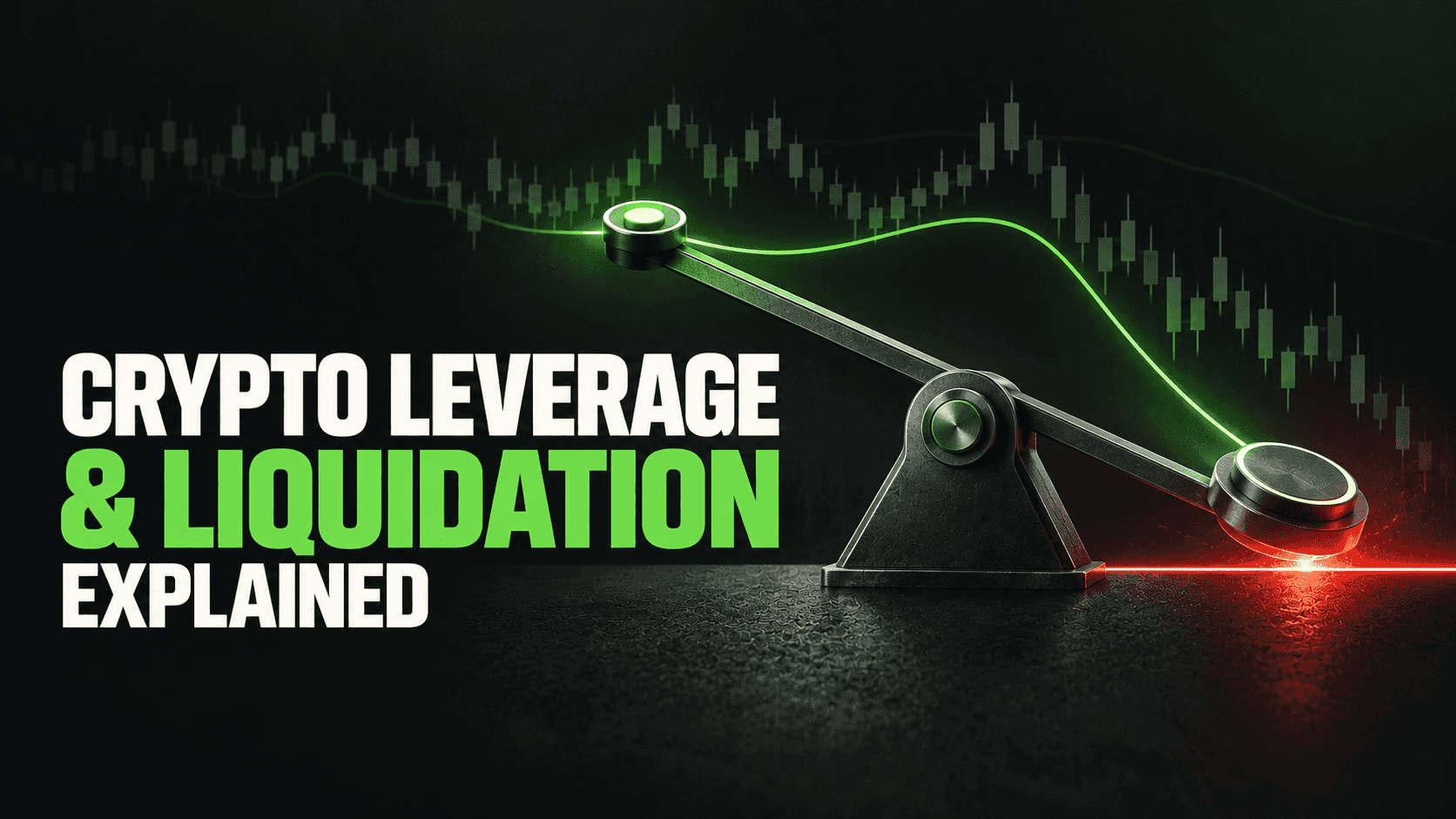
Crypto leverage lets you control a position larger than the capital you put up. With 10x leverage, $1,000 of margin controls a $10,000 position, so every 1% price move becomes a 10% change in your margin. Liquidation is the point where losses have eaten enough of that margin that the exchange closes the position for you. For a long position, that point sits roughly 1 ÷ leverage below your entry.
Leverage has a terrible reputation, much of it earned. But the damage comes from undisciplined leverage, not from leverage itself. Used inside a risk framework, it is a capital efficiency tool. Used without one, it multiplies whatever mistake you were already making.
How does leverage work in crypto?
Most crypto leverage is traded through perpetual futures, contracts that track an asset's price without expiring. You post margin, choose a leverage level, and the exchange lets you hold a position that many times larger.
| Leverage | Margin posted | Position size | 5% move in your favor | 5% move against you |
|---|---|---|---|---|
| 1x | $1,000 | $1,000 | +$50 (+5%) | −$50 (−5%) |
| 5x | $1,000 | $5,000 | +$250 (+25%) | −$250 (−25%) |
| 10x | $1,000 | $10,000 | +$500 (+50%) | −$500 (−50%) |
| 25x | $1,000 | $25,000 | +$1,250 (+125%) | liquidated |
The last row is where most people learn about leverage the hard way.
How is liquidation price calculated?
A rough estimate for a long position:
Liquidation price ≈ entry × (1 − 1 ÷ leverage)
For a short, it is roughly entry × (1 + 1 ÷ leverage). Exchanges add maintenance margin requirements and fees, so the real liquidation price arrives a little sooner than this estimate. Always check the number the platform displays before you enter.
| Leverage | Approximate distance to liquidation (long) |
|---|---|
| 2x | about 50% |
| 5x | about 20% |
| 10x | about 10% |
| 20x | about 5% |
| 50x | about 2% |
| 100x | about 1% |
Crypto routinely moves 2% in minutes. At 50x or 100x, ordinary noise is enough to wipe out a position before any thesis has had a chance to play out.
Why do so many leveraged traders get liquidated?
Usually for one of four reasons:
- No stop loss. Without a stop, the liquidation price becomes the stop by default, and it is the worst possible exit.
- Sizing from margin, not from risk. "I'll put $1,000 in at 20x" says nothing about how much you are willing to lose.
- Leverage chosen by conviction. The more certain someone feels, the more leverage they use, which is exactly backward.
- Cross margin surprises. In cross margin mode, one losing position can draw on the whole account balance.
How do you use leverage with discipline?
The rules we teach are simple, and they come before any strategy:
- Set your risk per trade first. Decide the dollar amount you will lose if the trade is wrong, for example 1% of the account.
- Put the stop at your invalidation level. The price where the thesis is proven wrong.
- Size from the stop. Position size = risk ÷ distance to stop. See our position sizing guide.
- Then choose leverage to fit the margin you want to post, and check liquidation. Your stop must sit well before the liquidation price, with room for slippage.
- Use isolated margin so one position's loss cannot spread to the rest of the account.
Here is what that looks like. On a $50,000 account risking 1% ($500), you plan a long with a stop 4% below entry. Position size: $500 ÷ 4% = $12,500. At 5x leverage you post $2,500 of margin, and liquidation sits roughly 20% away, far beyond your 4% stop. At 25x you would post only $500, but liquidation would be about 4% away, right on top of your stop, which is a trade that should not be taken.
Same idea, same risk, same stop. The only thing leverage changed was how much margin was tied up and whether your plan or the exchange stayed in control.
Is leverage worth it for a long-term investor?
It depends on your goals and your discipline. Leverage lets you hold active positions without tying up as much capital, and it makes short positions possible, which is how you hedge long-term holdings or benefit from a falling market. That is the idea behind bidirectional exposure.
But none of it is required, and none of it is safe by default. Leveraged trading is highly speculative. Losses can happen rapidly and can include the full amount you deposit. If you use leverage, learn it with small size, use hard stops, and never trade money you cannot afford to lose.
Where to learn it properly
Inside Crypto Renegades, leverage is taught after position sizing and the loss boundary, never before. Members bring their leveraged trade plans to live sessions, where instructors check the size, the stop and the liquidation distance. If that is the kind of structure you want, book a fit call.
Frequently asked questions
Leverage level matters less than risk per trade. If a position is sized from its stop, the dollar loss is the same at 2x or 20x. Beginners are usually safer with low leverage because it keeps the liquidation price far from entry and leaves room for mistakes.
As a rough estimate for a long position, liquidation price is about entry × (1 − 1 ÷ leverage), before fees and maintenance margin. Every exchange uses its own exact formula, so always check the liquidation price the platform shows before entering.
Depending on the product, platform and market conditions, losses can occur very quickly and can include the full margin posted. In some cases and products they may exceed it. Always read the platform's terms and use isolated margin and hard stops.
General education only, not financial advice. Crypto and leverage involve substantial risk of loss. Read our risk disclosure.

Written by
Niko MercurisCo-Founder and Mastermind Lead, Crypto Renegades
Niko has operated in business and financial markets for more than 25 years. He trained at Online Trading Academy under hedge fund traders, traded stocks and options through 2008, and moved into crypto futures when leverage reached decentralized platforms. He is the author of Millionaire Mindset Mastery.