Why More Crypto Research Makes Your Decisions Worse
You open the exchange with good intentions. Twenty minutes later you have five tabs, three YouTubers and no position. The bottleneck is not information. It is structure.

Updated
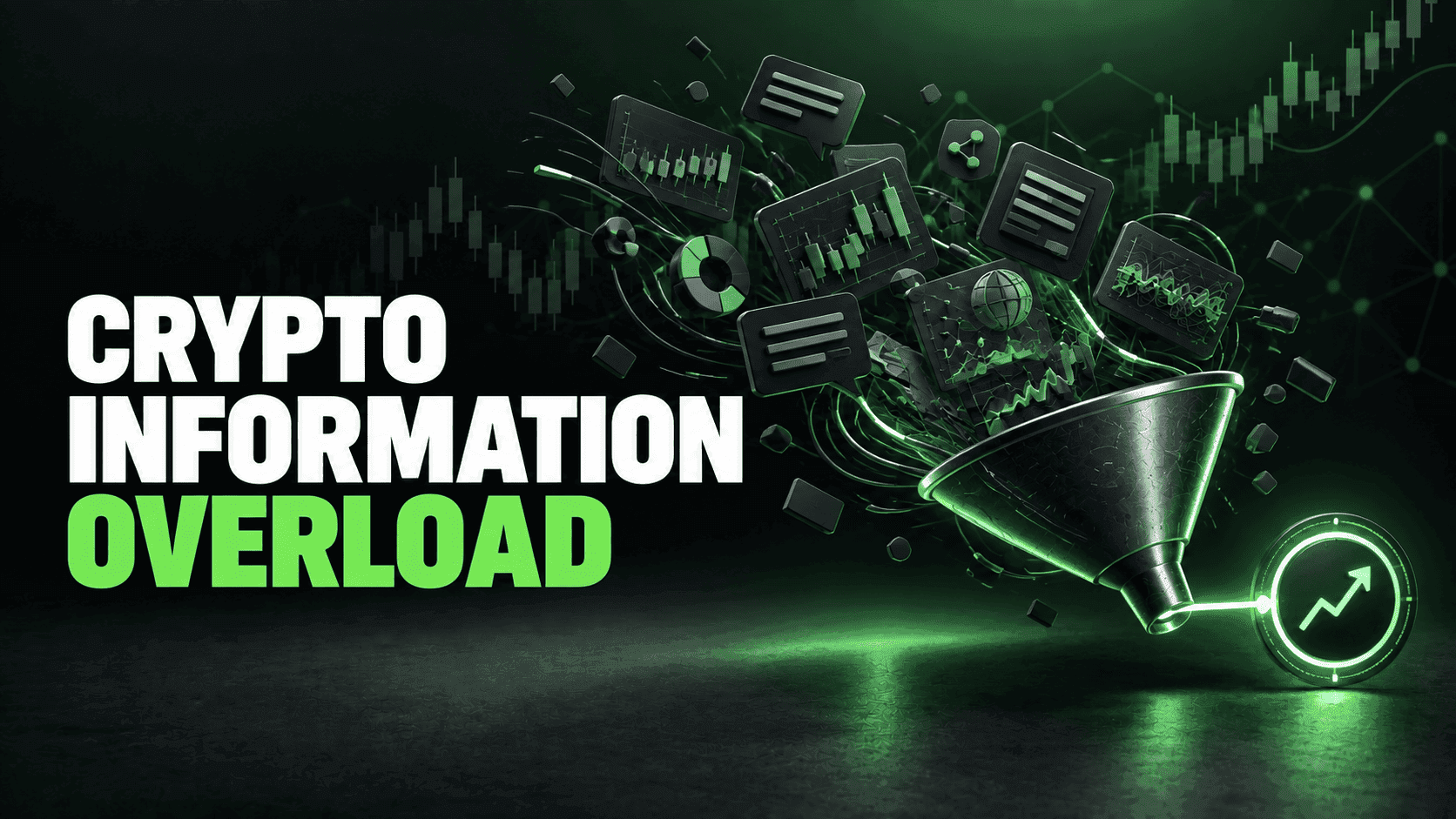
More crypto research makes decisions worse when it arrives without a structure for using it. Every new video, thread and group adds opinions but no method for choosing between them, so the pile of options grows while conviction shrinks. The fix is a fixed decision sequence, not another source.
One of our members described his state before joining in six words: "I'm over my head. FOMO and information overload happened." He was a capable adult with a career behind him. He was drowning anyway.
Does this sound familiar?
You open the exchange with good intentions. Twenty minutes later you have five tabs, three YouTubers and no position.
You have watched hundreds of hours of content. You know what an RSI divergence is, you follow a dozen accounts on X, and you are in several Discord servers. You can explain the halving cycle to a friend at dinner. And after months, maybe years, you have no working position and no process to show for any of it.
It is especially frustrating if you are competent everywhere else. You run a business, lead a team or make decisions people rely on. Then capital starts moving on a chart and the rules disappear.
Why doesn't more information help?
Because information and decisions are different things.
Free content is built to be watched, not to be acted on. It rewards novelty, so there is always a new indicator, a new narrative, a new coin. Each one is a reason to wait a little longer, because there might be something you have not considered yet.
Crypto makes this worse than traditional markets. It trades around the clock, it is fragmented across thousands of assets and platforms, and the loudest voices often have something to sell. Without a filter, everything looks relevant.
The result is not ignorance. It is paralysis: too many inputs and no rule for turning them into a single action.
What actually turns research into action?
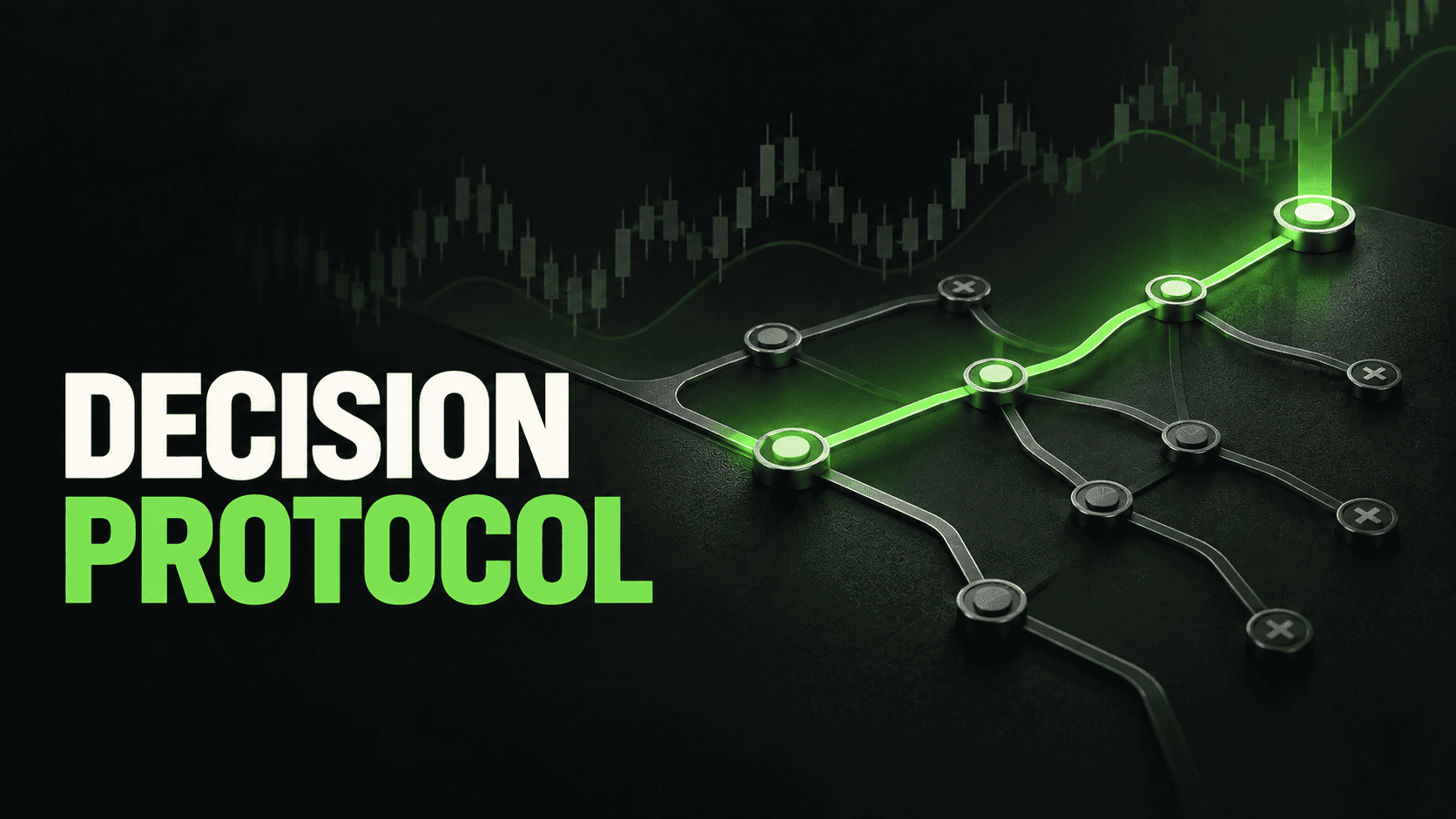
A decision sequence. The same short list of questions, answered in the same order, before every position:
- What is the thesis? What do you believe the market is doing, and what evidence supports it?
- Where is the idea proven wrong? The invalidation level.
- How much capital is actually at risk? Your risk per trade, in dollars.
- How does this position affect total exposure? Does it stack on top of positions that move together?
- What happens after a win or a loss? The exit plan, and how it goes in the journal.
Once those five are answered, the decision is made. Any further research has to change one of the answers to matter. That single rule filters out most of the noise.
It also changes what you consume. Instead of watching anything that looks interesting, you look for the specific evidence your thesis needs, and you stop when you have it.
Why accountability matters as much as structure
Structure tells you what to do. Accountability makes sure you do it.
Most people stall in private. Nobody sees the trade you did not take, or the plan you abandoned when the market moved. A review loop changes that. When you know your decision work will be looked at, by a mentor or a group, you finish it. And when someone who has seen thousands of trades reviews it, you learn in weeks what might take years alone.
Capable people already know this from the rest of their lives. They hire accountants, coaches and advisors, not because they are unable to learn, but because they value their time. Investing is no different.
A simple experiment for this week
- Pick one asset you already follow.
- Answer the five questions above in writing, in under ten minutes.
- If you cannot answer one, that is the only thing you research.
- Decide: take the position at your planned size, or write down why not.
- Log it either way.
You will learn more from that one written decision than from another week of videos.
Where to go from here
Inside Crypto Renegades, those five questions become the Decision Protocol, and members bring their written decisions to live sessions to have them reviewed. If you are tired of researching and ready to build a process, book a fit call. We will give you a straight answer on whether it fits.
Frequently asked questions
Because each new source adds opinions without adding a way to decide between them. Without a fixed sequence for making a decision, more information creates more options to second-guess, which shows up as hesitation.
Use the same short list of questions before every position: the thesis, the price that proves it wrong, the amount at risk, the effect on total exposure, and the plan after a win or a loss. Once those are answered, the decision is made.
You need enough context to form a thesis, but most news is noise for a disciplined investor. A process decides what information is relevant to a specific decision, and everything else can be ignored.
General education only, not financial advice. Crypto and leverage involve substantial risk of loss. Read our risk disclosure.

Written by
Niko MercurisCo-Founder and Mastermind Lead, Crypto Renegades
Niko has operated in business and financial markets for more than 25 years. He trained at Online Trading Academy under hedge fund traders, traded stocks and options through 2008, and moved into crypto futures when leverage reached decentralized platforms. He is the author of Millionaire Mindset Mastery.